Home 2023 › Forums › Politics & Current Events › Future Timeline: AR/VR
split from: https://cognitivetype.com/forums/topic/future-timeline/#post-21235
safsom:
Specific Criticisms
To start off, I have a problem with the conclusion you arrive at from your analysis of VR/AR introduction in major cities, particularly the idea of a “digital consciousness”. In addition, there are numerous problems in the line of reasoning you employ to arrive at this conclusion. In your pathway arriving at this conclusion, you also refer to the introduction of AR aspects to city-life and to optimize the city experience. The main problem I have with this is that most VR/AR technology requires the hosting / presence of advanced technology in the citizens. This creates a demographic problem. The phenomenon that would be seen (especially in developing countries), would be one of infrastructure disparity, those with smartphones advanced enough to access points of the AR would enjoy more benefits than those that do not. One could say that “all smartphones have AR capability”, but this is not true. It is actually already quite resource-intensive as a process for most smartphones to access a camera process, and layering 3D imagery upon camera imagery is something only really the most advanced / big-name smartphones can do. Most people have shitty, entry-level phones. The current political climate (decisively so) in most countries that would even bother to consider such a developmental consideration is one of polarization, and more importantly, class consciousness. There are already people using many developments as an excuse to allow for social stratification / division into what’s perceived as classes (based often on the all-encompassing conceptual primitive of “privilege”). If the ability to access AR systems were to be considered “clout” (and those with access to more social social services and benefits as a rule are often seen has having more “clout”), this sort of move is actually something that could lead to a great deal of political resistance, and so the subsequent points you outline (specifically those regarding the integration of a digital consciousness) likely will not follow in most atmospheres (based on the grounds, of course, that access to these AR systems will be considered a “privilege”). Of course, it’s possible that governments will anticipate this and attempt to limit the presence of AR in relation to city-life integration, but in this case, this will be totally useless (as the integrated facilities will be trivial, as the integration of non-trivial facilities means public resistance from those without access). Your contingency regarding the building of alternate, AR/VR-only cities is interesting, but I think ultimately this will be met with the same political resistance (possibly even worse, because of the undertone of “apart”-ness). Progressing with more specificity, I have deep problems with your idea of a “digital consciousness”. Consciousness is something that we are not able to even comprehend yet at an individual level, so unless you are deferring to a digital cultural synthesis (progressing in accordance to some standards or laws of social progression, perhaps Spengler’s), I don’t actually think technologically grounded inter-linked system has access to qualia of experience (as thus far, qualia seem to be exclusive to biological systems). However, I don’t have enough evidence at hand to refute this conclusively, so I will end my criticisms regarding the VR/AR predictions here.
@safsom - Heh! Really enjoyed reading that. I'll start by admitting awareness of my own naive and optimistic tendencies. Typologically, surely my high Ne factors into this, as well as my depreciation of certain elements of Pi. Despite timelines usually being Pi dissertations, in this case mine is moreso a sequential Ne emergence/projection guided through my own flavor of alpha potentialistic tendencies.
This is a tendency I surely cannot overcome in myself, despite my efforts, but it's also the predicament we all face due to the implicit assumptions of our metabolism. Others --Ni users like yourself-- may be inclined to insert the opposite spin on the same information, or simply give more focus to certain areas given the same facts. Hopefully, somewhere between the dialectic of opposites (both between you and me, as well as in this debate at the social level), the truth will manifest.
The main problem I have with this is that most VR/AR technology requires the hosting / presence of advanced technology in the citizens. This creates a demographic problem.
I have to approach this from the angle of smartphones, since it's relevant to VR/AR. As of 2020 the number of smartphones in the world is roughly 3.8 Billion, or about half the global population. In developed countries like the US, the number of people with phones is 96% and the number with smartphones, specifically, is about 81%. This means only ~15% of people in the US have low-tier, old non-smart phones.
This is a crazy level of market saturation. We have to consider how incredible this is when the first iPhone debut was in 2007, so only 13 years ago. What was, ten years ago, a luxury Apple product that the average person could not afford is now sub-par compared to the kind of basic phone you might get with a $200 smartphone plan. But people said similar things about the potential stratification/division that such tech would cause. 13 years later we see a different reality. The technology came down in price, because that's what products do when they're mass-manufactured, to where it's now affordable for everyone.
There is something counter-intuitive about technology here. When technology is most expensive is when it's still less useful. The "elite" products of today don't compare to the commonplace products of tomorrow, and that's because market pressure drives competition and innovation, and innovation drives cost down. Therefore technology gets smaller, cheaper and more efficient, proportional to its wider adoption and client support. The idea of this being kept for some elite class is actually not the way reality unfolds. If only the elites have something, it also means it lacks the infrastructure (i.e. the global network of app-developers) to make it great.
If smartphones didn't have thousands of App developers (and they wouldn't, if they were prohibitively priced) then smartphones would not be as great. The greatness literally only comes to be there when it comes down in price, never before (See Ray Kurzweil's talk here for more, if you have a free hour sometime, it's really interesting.)
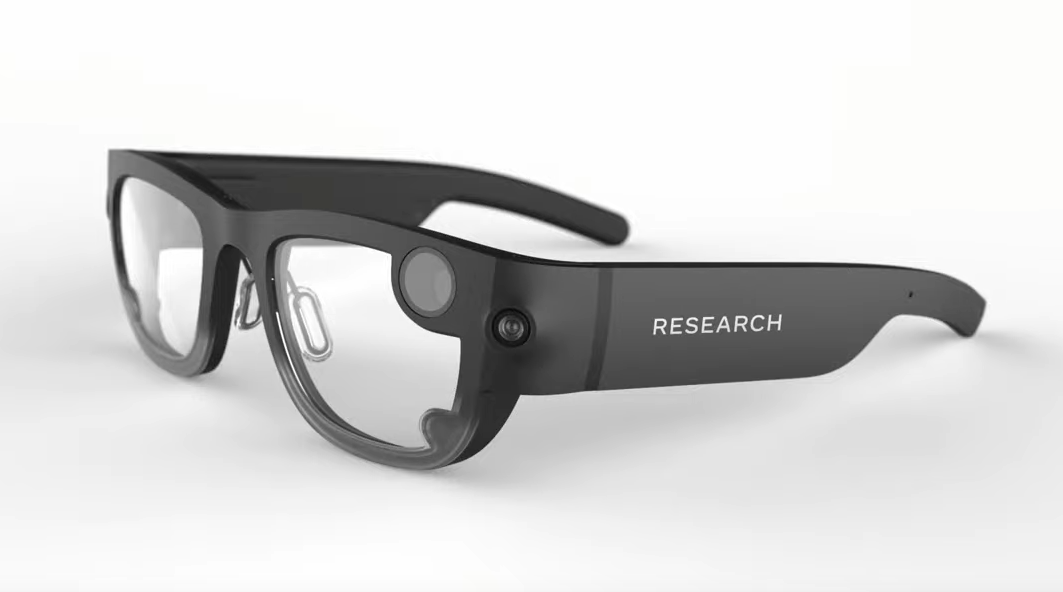
Anyhow, what I am talking about when I say AR/VR Glasses is this:

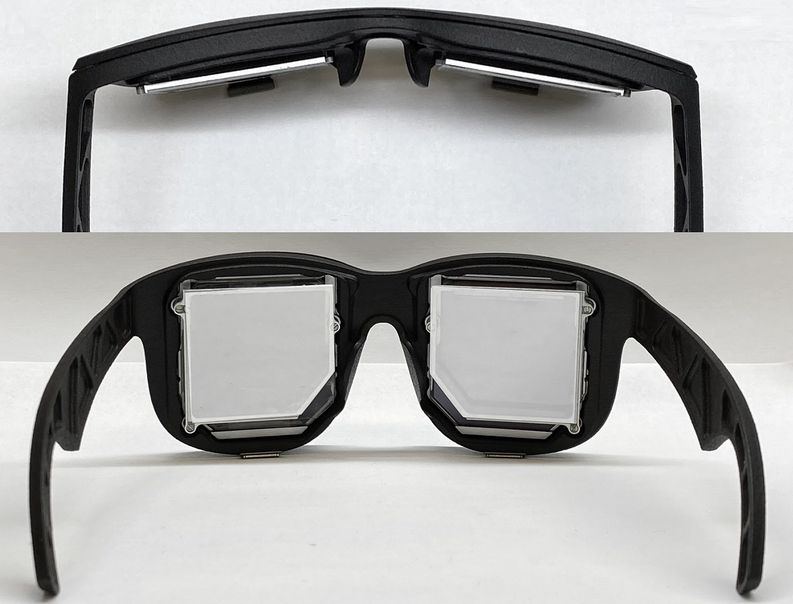
^ This is a photo of an actual prototype teased by Facebook/Oculus this year, of their in-production VR glasses, and where they aim to take the technology next. If you're familiar with the Oculus Rift and HTC Vive, these headsets are currently very clunky and not suitable for social/casual wear. But this new form factor, which I put out 5 years from now (2025), will be socially acceptable and therefore can constitute the first usable non-enthusiast VR device. This is something you could picture people wearing at a Starbucks, as they are in a virtual meeting with someone on the other side of the world. This is what I'm predicting as being analogous to the iPhone 1.
Now, what I'm actually predicting is that VR/AR glasses will become the form factor that will replace smartphones in the 2030's. I think the same thing that happened with smartphones (in a 10-ish year span) will happen with AR/VR glasses. They're going to come down in price and become a must-have for everyone. This trend will slowly start in 2025 but really mature by 2035. To give a practical idea of why this seems inevitable to me-- it's because of the power of the form factor and use cases.


^ VR/AR glasses will allow people to interact with virtual screens superimposed on the real world, in a day-to-day way. Google Maps won't just be on your phone screen, but you'll see the pathway you need to follow as a glowing line in front of you. Object-detection will make it possible for AR overlays to identify for you what things are, and perhaps even where to buy them if you want one. You can project out a movie and watch it as a cinema-sized screen in front of you, rather than hunching down on your 5 inch smartphone screen. It will immediately become evident that smartphones are an older and more ergonomically limited technology. The days of fiddling with little screens will eventually come to an end.
(I think my predictions are actually rather conservative in terms of what many in the AR/VR space anticipate to happen. They see this happening in 2023 and mass adoption by 2027ish. I think it won't become mass-adopted until mid 2030 when version 2 of the glasses really fix the problems that will inevitably come with version 1.)
If the ability to access AR systems were to be considered “clout” (and those with access to more social social services and benefits as a rule are often seen has having more “clout”), this sort of move is actually something that could lead to a great deal of political resistance
The socio-political implications: I agree that in some sectors of my timeline the socio-political elements are more relevant. But in this sector we already have evidence of smartphones undergoing this decentralized route and becoming a mainstay of the public, largely unaffected by politics or class issues. This technology really won't be the difference between elites and lower class because it won't necessarily make people any different yet. It's just a gadget, and one that is already just $2,000 or so, which will drop to $200 eventually. A person who uses AR versus a smartphone user will be approximately the difference between a person (Boomer) who uses a traditional landline versus a smartphone-using millenial. Both will exist and do their jobs, and both are different tools. People won't be defined by their use of AR or anything, anymore than there is a 'class' problem between people with or without smartphones today. People don't riot against smartphone users.
And again as I said, the tech wouldn't even be elite/compelling (and thus not count as a real status-division) until it has widespread app developer support. So, ironically, by the time it becomes good enough to make a class-difference, it also has necessarily gained the support of a wide developer base that is decentralized -- thus making the 'class' difference (if any) as one between the past decade and the current one, and not between individuals of the present.
What will really make these products great is when Google, Microsoft and Adobe release app suites for them, native to AR/VR, for the workspace. But they won't make these apps until there's a wide market for them -- i.e. commoner adoption.
Responses
This trend will slowly start in 2025 but really mature by 2035. To give a practical idea of why this seems inevitable to me– it’s because of the power of the form factor and use cases.
While I can see while you may think this, I view this issue rather differently, and this arises out of the necessity to view the emergence and rise to prominence regarding smartphones and the same phenomenon for AR glasses (given the implications that you are providing in your analysis) rather differently. You rightly say that smartphones and their explosion (which you have rather elegantly statistically substantiated above) emerged from a necessity for them - and indeed, at the time, the emergence of the smartphone was something that truly was necessary. Portability was the primary factor at hand for most people, people felt that the computers they owned did not do much in that regard, and indeed, the computer (here referring to a laptop or desktop, not a Turing machine more generally) is limited by its form factor - you need a mouse, a keyboard and a monitor in order to have one, and the attainment of this form generally necessitates a pretty large machine.
When the smartphone came by, it is as if this medium (which was already quite powerful), was endowed with an even greater power, that of mobility, and so the era of moving computation began. On a more philosophical note, to me, this is an excellent manifestation of the race towards reaching the quantum boundaries of technology - there was a great book on this written by Princeton press that I read recently). However, that is tangential; what is not tangential is that the need for a more concise computer system has largely been exhausted by this convenient form-factor, just like the laptop has had no significant replacements in the desktop realm, I don't really see a tendency to really draw people to stop using smartphones. Assuming your analysis regarding market stratification holds true (which I don't think it does, but I will assume here for the sake of argument), one must note that all of the features you have noted about AR glasses will be accessible to anyone with smartphone that on it can run an AR client.
And it is not as if such smartphones are scarce, even. The past three generations of Apple's iPhones (the most recent of which my mother bought for my father as a present) has full AR capability, and I believe that the past two models had semi-functioning capability in that regard. The phone measured my height within an accuracy of five centimeters (which I find crazy, and I am fascinated to study the mechanics behind how that measurement is made). Companies, despite all the supposed attention towards AR, are still investing in smartphones. Indeed, looking at the growth rate for smartphone stocks, it appears that despite AR coming in (while still doing largely the same things a smartphone can), the stock prices will remain biased towards growth. The points that you've given for the practical necessity of AR units seem to largely overlap mostly with what current technology seems to be doing rather effectively anyways, so I still contend quite heavily to this prediction - I don't think people have quite as enough emphasis on ergonomics as you say above. To most people it is about size (besides, there are myriad logistical inconveniences borne out of such technology too, including a lack of buttons and un-intuitive operative constraints).
The idea of this being kept for some elite class is actually not the way reality unfolds. If only the elites have something, it also means it lacks the infrastructure (i.e. the global network of app-developers) to make it great.
This line of reasoning is possibly the strongest one that you've provided in these posts (and this is not meant to be derisive, as some of the other lines of reasoning have been pretty strong too), but this is obviously not the case if you consider the implications of a governmental application of AR. While there may be a trend unfolding to reduce the prices of these items to allow broader public access (that you have given sound statistical support for, so I will not refute that), I still do not think that most people will adopt these AR headsets immediately, if at all. I say this is still an issue because you will have a certain Luddite proportion in any population that dogmatically adheres to certain technologies (or in a more philosophical context, certain systems of ethics) and refuses to adopt anything new. I agree that for most populations this proportion is rather insignificant. However, as I have outlined above, (a. it is possible to do most of the things that you can do using an AR headset on a smartphone with minimum difficulty (ergonomics isn't a factor that most people just looking for a device will consider), meaning that these Luddites have an incentive specifically not to get AR headsets for this purpose and (b. even specific public infrastructural facilities like taxi hailing, direction-showing, etc... are done largely through smartphones already, and governments have already largely integrated their technologies towards this end. Time and money has been spent constructing and integrating public transportation, and even currency (China is planning to eliminate physical currency through systems like WeChat within the next 15 years) through smartphones, and I do not see this changing anytime soon.
One could say that if smartphones replaced the role of another actor to play this role, why can't AR headsets replace smartphones to play this role? There are a few important considerations to make here. One is that the average computational power of an AR headset (even the ones that stretch far into the future) as a rule will be less than the computational power of a smartphone (due to the need for smaller / simpler chips and performance of less tasks), and even in the the case that the computational power turns out to be similar (which I see as unlikely) , the operating systems and interfaces therein will be far less complex (due to less sensors linking the device to the external world, and a lesser need for that kind of multifaceted interactivity that you see smartphones absolutely needing). It is like the difference between smartphones and computers, where smartphones with a smaller form-factor are able to perform less tasks than your average desktop or laptop, with the tradeoff of greater portability. A similar thing may happen with smartphones and AR headsets, but I see this as unlikely if we are to take the purposes that governments want through technological integration, in particular, it is much easier to implement multithreaded network scheduling (multiple tracking apps) on a device like a smartphone than it is on an AR headset - which is a primary concern for many governments regarding the integration of technology into a wider sphere. This is why I don't think the AR headset will replace the smartphone for public-service tasks or the purposes you outline above; the same functions are mostly performed by smartphones too. Though one could posit that companies could invest in making AR headsets more powerful so they could have these applications, why would governments spend money translating their existing suite to a new language which largely does the same thing? Due to the unlikeliness of consumer adoption widely (not until 2055+ at least, in my view, when there will actually be discrete applications), I don't think governments have a real transitional motive here too - not when the current systems are already so integrated.
What will really make these products great is when Google, Microsoft and Adobe release app suites for them, native to AR/VR, for the workspace. But they won’t make these apps until there’s a wide market for them — i.e. commoner adoption.
And it will be difficult to see these app suites and plans for AR/VR realized when one sees that their applications are performed widely by existing technological products, which have been integrated not only by individuals, but by entities as large as governments (who rely quite heavily on smartphones as of now). My own prediction is that if all of this does happen, it will be a time after 2055, when the limitations of silicon chip computing are being addressed more seriously, and real breakthroughs in microtechnology can happen (which will lead to a portability giga-blast).
While I do realize that lines of reasoning similar to mine often turn out to be overly-pessimistic, and indeed ultimately, wrong, I think that in this case the future will turn towards my favor; primarily because governments have already invested a great-deal in monitoring citizen practices through the employment of systems as they are. ISPs and cell phone provides work rather intimately in many states with government companies and app developers as an integrated unit in several countries to allow for detailed and nuanced tracking of people; these technological ecosystems have already applied themselves to spheres as diverse as cyber-terrorism (which is being curbed fairly fast by the introduction of smartphones as a means to track down units like sleeper-cell networks), digital currency, and essentials like paying's one taxes or paying the rent (which is already officially done through WeChat in a country like China, for example). An AR headset will (a. probably operate on a fundamentally different instruction set (most likely something even more RISC-esque than ARM, as most of these integrated systems seem to operate on something similar (b. a fundamentally different kind of operating system (the interface changes necessitate this, and most likely for the optimal functioning of these headsets different multi-threading mechanisms are needed for kernels not present right now. I agree that they could potentially be very useful for certain agents (and fast too, if applied), however, the cost-benefit analyses for most of their prospective appliers seem to skew against their adoption. To draw a typological analogy, imagine having to completely reconstruct your Ti on new grounds. It's not something very easy. The rapid integration of these technologies into smartphones (which has already been done) does not make this easy playing field for AR headsets either - the architectural differences are too many.
Architectural differences
Most smartphones run on the ARM (Advanced RISC machine) chipset, which is a largely portable, reconfigurable instruction set most commonly employed for consumer-level embedded systems (that is, embedded systems that most consumers will consider a "computer"). However, there are embedded computers on systems even smaller than your smartphone (like your fridge, or your toaster at this point, even). Multi-tasking is a rather simple process for most smartphone kernels relying on an ARM architecture (like Apple's iOS or Android); the flexibility of the hardware and computer architecture, not to mention the vast (relatively speaking) storages of RAM therein allow these devices to run basically any task. Most important to this functionality, as mundane as it may seem, are the flat configurations that most of these devices come in; this flatness allows a CPU to rest as it normally would, a RAM chip to rest as it normally would, etc... and computers being similar in shape (essentially flat boards) allows for a similar level of computational power. You don't have this spatial liberty when it comes to AR headsets; indeed, nothing I've read so far supports positively the possibility of having non-flat semiconductors, and thus it seems that CPUs for these headsets will not be able to pack as many transistors due to a smaller operative area, leading to a smaller clock cycle on average for similar intended applications (the quantum constraints I outlined earlier apply), and so you will have a less powerful CPU, with a possibly smaller instruction range and consequently, less programmatic and architectural diversity. Not to mention difficulty in porting.
Further Reading
https://www.ctg.albany.edu/media/pubs/pdfs/mobile.pdf
https://www.govtech.com/local/The-Public-Sector-Considers-Mobile-First.html
https://files.eric.ed.gov/fulltext/ED557222.pdf
Oh interesting! So if I can summarize your main points (hopefully fairly):
Most of these seem fairly technical, which I'm actually happy about cuz addressing them is more possible. 🙂
So, there are roughly two philosophies currently at work in the AR space. One is the hardware-compromised, minimalist approach of things like Google Glass and Focals by North. For these devices I think your criticism applies fully. There's not enough space in the glasses themselves to host robust chips, it can't do what smartphones do, and they don't have parity with smartphone software. Thus, they can only output basic notifications and do rudimentary processing.
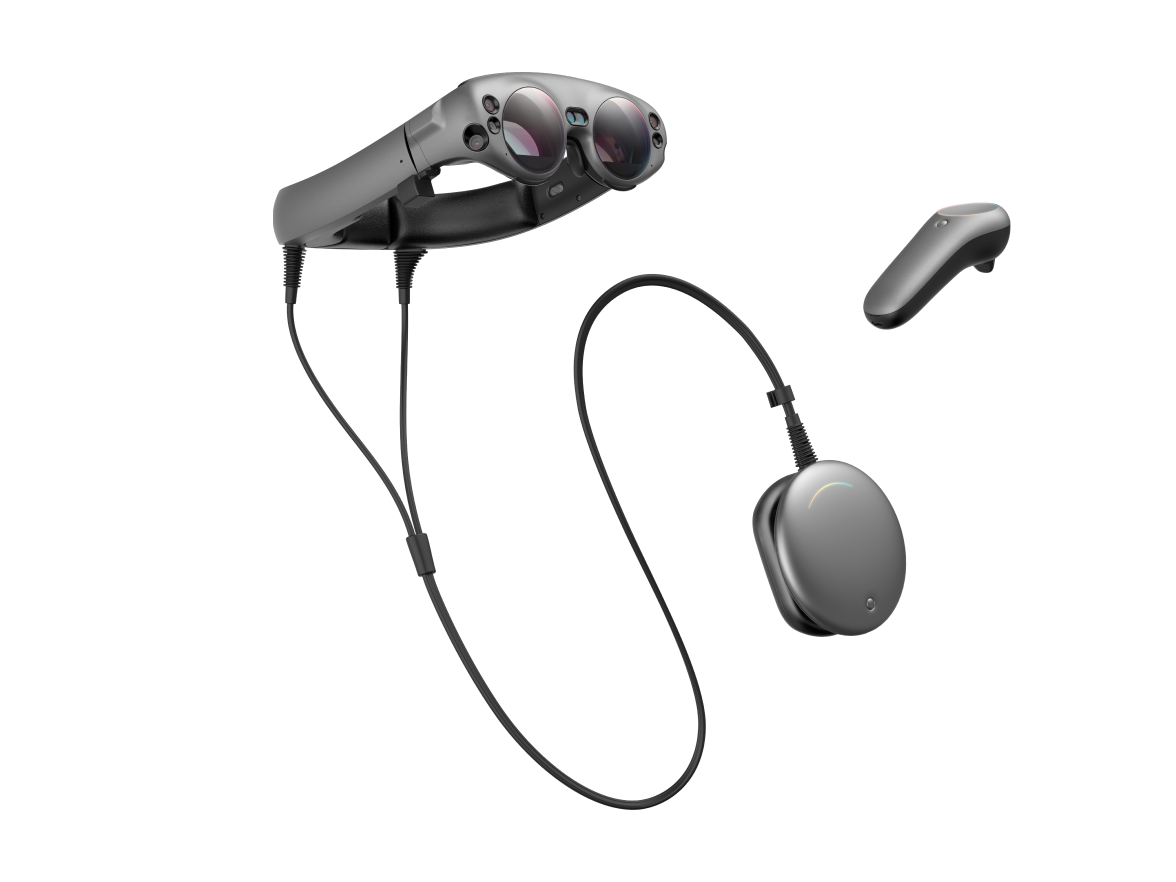
However, there is a second philosophy for how to do AR, and that's the 3D/volumetric space, with no-compromises in processing. Here we have Microsoft Hololens and Magic Leap stepping into the arena, with others in the wings.

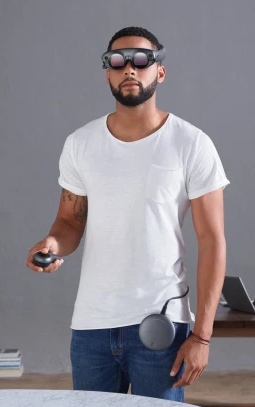
^ This is Magic Leap 1, a current-gen leader in AR. Notice the puck/circle on the guy's waist. This is where those circuit boards, as well as the battery, are being housed:

There is enough space in there to fit all the guts and chips in a modern smartphone, and then some. A device like Magic Leap is certainly more powerful than an average smartphone, and future devices of this variety will be too. So one way to conceptualize the future of this branch of AR glasses, in the short-term, is as 'accessories' tethered to smartphones or smartphone-like hardware that has been repurposed. Imagine it like this: your smartphone provides the processing power and the battery, but it's tethered to your AR glasses, which receive all the benefits of that processing power, but allow you to display it as an overlay onto the real world.
This also solves the problem of device parity in two ways. One is that it literally is reliant on smartphone software/Android so there's no discrepancy in platform with any existing services. And secondly, the screen of the smartphone itself could just be projected into AR space as an overlay on the world, so you can simply log into PayPal or WeChat via your AR glasses in mid-air and swipe with your arms.
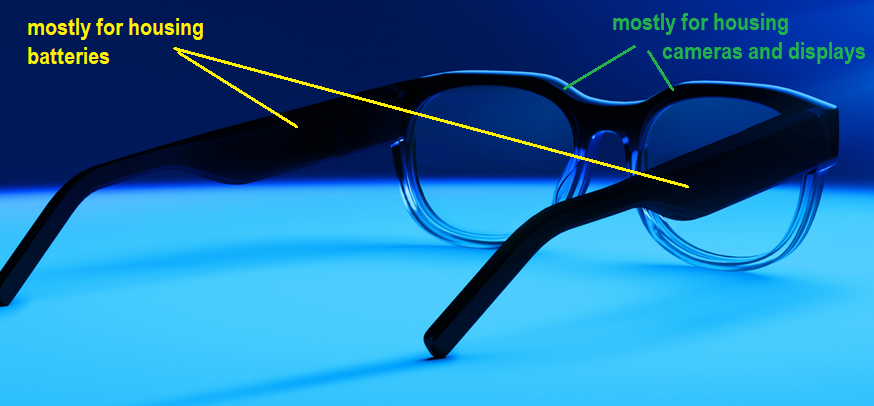
From where we are, the next step that will likely happen is that AR glasses will have internal batteries, allowing them to be untethered, but still do the processing via bluetooth to a smartphone in our pocket. Thicker rims will allow this:

Essentially, the only thing the glasses have to do, in the short term, is have enough battery to do the job and have the displays + cameras to track the environment. All of the processing is off-loaded to your cellphone, and fed back into the glasses. Now I realize this goes against my idea of AR glasses replacing smartphones, because they're still reliant on them, but I'm talking short-term here. This is already doable with current 2020 tech, or is a year or two away.
Later down, this dependency on external processing will be overcome. Companies like NVIDIA are working closely with VR companies like Oculus and are aware of the growing trend towards AR/VR. They're developing their chips with these devices in mind. So I wouldn't be surprised in the least if they made a long-rectangle chip design that could fit in the thick rim of AR glasses sometime in the near future.
As for the argument of ergonomic inferiority... I dunno what I could say to that one. xD
It's really a no-contest to me.
one must note that all of the features you have noted about AR glasses will be accessible to anyone with smartphone that on it can run an AR client.
No way dude. xD The added dimension of 3D creates a whole new experience. I'm wondering if you've ever tried VR? There's no way to explain the difference without experiencing VR firsthand. But basically, AR will be like VR with a pass-through view to the outer world. The kind of things you'll be able to do with AR are entirely impossible on the current Mac tablets -- which is not true AR.
edit: here's a video of the Hololens that shows the ergonomics and interaction types:
@safsom - One such case-- the nreal light:
Runs on ARM,
$499,
Uses a smartphone,
Can run any native Android apps, as well as dedicated 'Mixed Reality' apps (this is actual AR).
(thread split to go into more depth on AR/VR)
Not necessarily responding to saf here, but just generally want to share a bit more.
and wonder what you guys think.
This is a good video that outlines the ergonomics -- a platform called Spatial.io:
The capacity to have infinite work space hovering around you, to shrink/expand screens, pinch-move them, bring in notes from everyone else. The capacity to bring in models/objects, diagrams, etc. What you can do here is radically different from what's done with screens.
It's really heading in the direction of virtual 'presence'. So you'll be able to have virtual meetings with others that are far more compelling and meaningful than zoom meetings. You'll collaborate with coworkers in a third dimension and this is all already here. It's simply a matter of reducing the latency, increasing the bandwidth, increasing resolution, etc-- which happens with next gens. But it seems inevitable to me that AR meetings will be the zoom meetings of the 2030's, at the latest.
@Auburn
Interesting response, however, I do still think that some of the points are missing the mark (albeit being fairly fun for me to engage with and think about). Before I respond to them, however, I will follow your steps for the sake of structure and attempt to summarize the main points for your response as a way to construct my own responses (as I think that while we are both improving with each subsequent response, we haven't quite triangulated the truth of this matter yet).
Basically, both of these solutions seem totally pointless to me, mainly because it's obvious that for general adoption (and for ease of service-distribution), even if governments were to adopt AR/VR headset technology, bulk-purchasing in most countries is limited by tax intake; and public perception towards a lot of these projects (Luddites, as I mentioned in my post above) is not exactly always favorable. Basically this means that budget-wise, governments (and companies, especially newly emerging startups with lower funding in certain places) would adopt the cheaper (less powerful form-factored headsets) rather than the more expensive headsets for their purposes. Because the benefit to smartphones (despite ergonomics) in this case is minimal, I do not see a big paradigm shift when smaller / less powerful headsets are employed.
The solution based on larger / more powerful headsets and tethered headsets also seems a little far-fetched to me, mainly because (a. superior hardware + the novelty factor (which usually causes a price spike, as we saw with smartphones)) means that these options will be more expensive than the already existent ones, and (b. the tethered headsets actually depend on mobile phones despite performing largely the exact same functions. To be fair, I could see this primarily ergonomic innovation enjoy success in markets where there is already a saturation of equipment and so convenience / experiential factors are valued. However, in the developing technological markets (which are certainly quite important to consider, as huge areas of economic potential), cost-effectiveness and the smartphone most likely win over (as ergonomic considerations are secondary to growth here). I don't think companies or governments will adopt solutions that are less cost-effective without tangible benefit, so I will be conservative and say that advanced-chipset AR headsets will most likely enjoy adoption once they are made cheaper (which will happen if the smaller sets are profitable) and once they are able to operate standalone.
It’s really heading in the direction of virtual ‘presence’. So you’ll be able to have virtual meetings with others that are far more compelling and meaningful than zoom meetings. You’ll collaborate with coworkers in a third dimension and this is all already here. It’s simply a matter of reducing the latency, increasing the bandwidth, increasing resolution, etc– which happens with next gens. But it seems inevitable to me that AR meetings will be the zoom meetings of the 2030’s, at the latest.
Developed markets have systems mature enough to even warrant thinking about ergonomics; there's no need for shrewd pragmatism. The developing markets, the markets with more potential for earning and system-development don't have time to think of these considerations. It's go, go, go.
u just gotta believe saf! <3
Facebook Reality Labs announced their Project Aria a few days ago, which is an AR research tool their employees will be wearing starting next month, in preparation for the creation of a first-gen AR product by next year. This device does not yet have a display, but has 3D/spatial mapping abilities.

Intro Video:
https://www.facebook.com/facebookrealitylabs/videos/2616922421880787
More:
.
.
.