What are Psychometrics?
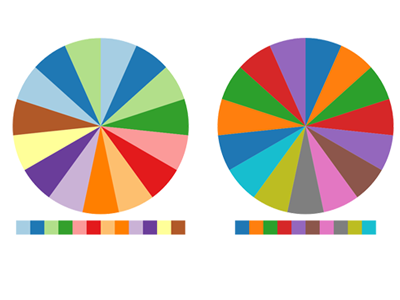 Psychometric systems create psychological categories they wish to highlight, build conceptual definitions for those categories, then sort people according to those definitions. Examples of psychometric architectures are the Myers-Briggs Type Indicator, the Enneagram, Socionics, the DSM and the Big Five. A primary attribute of psychometrics is classification categories. Great focus is placed on hashing out the details of these checklists used in classification, and an attempt is made to make the categories distinct. They are, in a sense, labeling systems that create a theoretical architecture and then apply that to the world.
Unlike most Jungian models, Cognitive Typology (CT) is not a psychometric instrument. CT is a physical hypothesis about body-mannerism clusters and their theorized psychological traits. As such, CT addresses its methodology and typology in a vastly different way. But to understand why this is the case, first we have to explore the problems inherent in psychometric devices.
Problem of Arbitrary Variability
The problem with most psychometrics is they suffer from a lack of any robust justification for why they draw the borders where they do in their categories, how many categories they need, and why choose those categories and not others. It is conceivable to create an endless assortment of psychometrics, each with slightly varying definitions ("borders") and to be sorted differently according to each system.
Oddly, all of these systems can be descriptively compelling and relatable, while lacking any scientific validity. This is because most ways of describing human nature will contain truths in them, but the one thing that lacks truth is any fixed reason to value one division of types from another. In the words of David Deutsch, they are all "easy to vary." Nobody necessarily knows which system is superior in how it's deciding to "cut up the pie" (organize the attributes) and so generally psychometrics function as helpful heuristics rather than as fixed truth of human biology or neurology.
We've seen this endless conceptual bifurcation in Jungian typology as well, with many typologists proposing their own slightly different definitions. We have Briggs, Beebes, Augusta, Keirsey, Quenk, Grant, Nardi, Drenth, Pierce, Powers, Murrell and many others cutting up the pie in different ways. Now, if these different interpretations are content with being considered no more than self-contained classification systems then all can be simultaneously "right" in their own way.
There is no underlying reality any of them can be measured against to know if they are more correct than any other. They thus remain internally consistent but ultimately unfalsifiable theoretical architectures - and for many that's fine. However, I believe we should care about the absolute truth of human natures, and not settle for helpful but unfounded heuristics. Humanity benefits when we put the truth of the universe above our own personal desires.
Overcoming this limit
Cognitive Typology, while not yet a scientifically corroborated model, is at least capable in principle of overcoming this hurdle by grounding itself on a physical phenomenon. This has the dual effect that its entire theoretical framework is simultaneously much more highly up for scrutiny, but also can be affirmed to have physical correspondence to reality. It bypasses the limits of psychometrics which have infinite possible, but arbitrary, categorization schemes, by focusing on body-mannerism clusters, which have a far more limited way in which they naturally cluster together.
Although various body-mannerism systems can also be generated, statistical analysis can be performed on body mannerisms to identify objective clusters of gestures that don't vary arbitrarily but do so naturally. In this manner, a definite phenomenon can be identified in the way humans gesture over time, and this phenomenon can be investigated for its psychological significance.
Jungian Cognitive Functions (JCF) & Its Shortcomings
 Note: I use the term "JCF" to refer not strictly to Jung's original definition of the 8 functions, but to those definitions subsequently modified and outlined primarily by Naomi Quenk, Harold Grant, Dario Nardi, Lenore Thompson and the like. These definitions see constant reiteration across the typology community, but I will refer to them as a general whole for the sake of discussion.
As David Keirsey concluded, sustaining typology as a psychometric that remains at the level of behavior creates a consistent - albeit shallow - system of classification. If the listed behaviors are exhibited, the appropriate designation (type) is given to the individual. This is similar to the Big Five method and the benefit of this approach is a more 1:1 criteria of measure for one's categories. The downside to the behavioral approach is that it treats individuals as caricatures, focusing little on underlying motivation and only gauging end effects. The more psychoanalytical typologists take issue to this, suggesting that via this approach people of different cognitive orientations are grouped together due to a shared affinity for a given end-activity, but little is discussed about why each person gravitates to that activity. It is more important --the JCFers say-- to discern the underlying cause of the behavior, rather than classifying based on the behaviors themselves.
Yet the JCF theorists try to solve one problem (the over-dependence on behaviorism) and inadvertently create another. They abandon behavioral descriptions of the functions for more sterile conceptual architectures. No behavior --they suggest-- is definitively indicative of a function. Instead the focus is turned to "how" information is being metabolized. To that end, each theorist puts forward his or her idea of what this metabolism is like. Here are just a few different definitions we might find:
| Theory |
Ti |
Te |
| Michael Pierce |
Ti: Forming judgments about a thing's subjective functionality in the mind of the individual |
Te: Forming judgments about a thing's objective functionality in the world |
| Dave Powers |
Ti: Reasons that are focusing on one specific area, according to their identity |
Te: Reasons that are focused on a wider area, according to the priorities of the tribe |
| Sociotype.com |
Ti is generally associated with the ability to recognize logical consistency and correctness, generate and apply classifications and systems, organize systematic and conceptual understanding |
Extroverted logic deals with the external activity of objects, i.e the how, what and where of events, activity or work, behaviour, algorithms, movement, and actions. |
| Lenore Thompson |
Ti makes sense of the world by apprehending it in terms of effects emerging from a cause, or a harmony of elements. For example, the way a beautifully made desk appears to emerge from a single idea. |
Te makes sense of the world by viewing things "objectively": in terms of categories and measurements that can be defined in advance of observation. |
As we can see, we are no longer beholden to behavioral caricatures to misinform us on the cognitive reality purported to lie underneath said behaviors, but now the function definitions are so far removed from tangible results that one can interpret the origin of their thoughts in either/any direction.
The Interpretation Problem of JCF Systems
While previously the bystander needed to evaluate his behaviors and attitudes/preferences against a list, now he must journey within and try to uncover the workings of his own mind. This would be ideal if it was indeed possible for the individual to engage in introspection and by it consistently discover the metabolic workings of his mind, but this is not what we see happen. As we discuss in this article, it is difficult to overestimate how ignorant we are to ourselves and to the formulation of our thoughts. In application, there is no evidence to suggest that this approach yields any more consistency in self-typings than behaviorism. Individuals may hop between types all the same, as they reinterpret the same behaviors to emerge from different origins.
Type Interpretations are Easy to Vary
 One week they may be convinced that their habit of taking flowers to their grandmother every Saturday evening is due to a feeling of guilt and obligation motivated by Fe's external ethical standards. The next they may believe the urge emerges instead from them personally; out of the resolve and impulse of their Fi. And yet another week they may feel their habit of taking these flowers to their grandmother may arise from a personally crafted ritual and nostalgia for the past born from their Si. The individual is left confused as to the cognitive origins of their actions.
To this the JCFers may respond by suggesting that we not focus on the motivation behind the flowers themselves, but to what governing impulse is consistently stringing together all their micro-decisions in daily life. And yet again we face the same dilemma, as each of these micro-decisions is questionable on the same grounds. And the willful attempt to find a common string tying these actions together leads very commonly to a confirmation bias where one's behaviors are all selectively viewed as emerging from the lens of their (current) pre-existing interpretation of their type.
The JCF proponents seek to resolve the problem of behavior-based methods by sterilizing the function definitions down to axioms that theoretically would weed out any mistypings by not affiliating them to any improper end-effects. Yet little resolution is given to the problem created by how these sterilized definitions are often so general that all people can conceive of situations in which it applies to them also.
The Systems Themselves are Easy to Vary
Furthermore, there is a tendency in JCFers to make appeals to symmetries when building systems. Certain mathematical framings of the functions will appeal more to our sense of symmetry and resonate with what we seek for in a model, leading us to adopt those interpretations. But there is no reason to believe that the underlying reality of the functions would appeal to our affection for symmetry, or these particular symmetries and not others. And even if the overlying phenomenon contained complete symmetry, a subtly different framing of the functions --with another delineation that's just as internally consistent-- may seem equally attractive, yet produce widely different typings when scaled up.
Thus, as endless debates ensue as to what abstract parameters better constitute a function, so too do the interpretations of behaviors change. And indeed they shift with no end in sight, nor any gauge for when we have ever arrived at the "perfect definition." Without an objective quantifier, it is impossible to know whether our concept is moving further away from truth or closer to it whenever it is revised. Shifting one's concept of Ti from the "judgment of a thing's subjective functionality in the mind of the individual" (Pierce) to "reasons that are focusing on one specific area, according to their identity" (Powers) cannot be considered an advancement or regress. The JCF approach is fundamentally limited in the same way as the behavioral approach -- even if it has a different set of problems to contend with. The answer to our real human nature will not be found by continuing to play these semantic games and circling around different definitions, but by finding out what cognitive functions truly are in some physical reality.
Cognitive Typology's Solution
 Cognitive Type is not a psychometric instrument. It is not a static set of psychological definitions that are capable of sorting people into categories. It's also not solely a theoretical architecture - although theoretical concepts are involved in its expansion and the theory is continually evolving to fit the evidence that is being unlocked. Cognitive Type is fundamentally a research project stemming from a biological hypothesis, that investigates a practical phenomenon existing as a physical (and by extension mental) reality of people.
What is meant by a "category" (type/function) in CT is not a conceptual description, but a measurable attribute of a person. For example, an "Ne" type is not a person who associates themselves to a given psychological description, but a person who -- regardless of their opinion of themselves -- demonstrates certain physiological signals on a continual basis.
A Two-Way Relationship
 The Cognitive Type research project began as an objective investigation into the intersection of type as defined by Naomi Quenk and visual expression, in order to investigate whether any reliable correlation could be drawn. To our surprise, correlations quickly began to emerge between the two which then began taking on their own life. As preliminary observations began to show high levels of fidelity between signals and cognition --- it became apparent that certain signals were positively predicting cognition. It then began to be possible to anticipate what type a new sample might be by first doing an initial survey of their vultology, then checking later to see if their psychology matches. If indeed their psychology (according to JCF) was properly predicted via the signals, then the signals remained and signals which did not positively predict JCF results were discarded.
However, as the signals allowed for a more robust understanding of the metabolic origins of the functions --- the signals were eventually able to correct for JCF mistypings. A given sample, who might have been typed as NiTe using the JCF methods alone, was seen as visually resembling the TiNe samples and NeTi samples hitherto categorized. This prompted deeper investigation into the cognition of the supposed NiTe and it became apparent that they were TiNe after all --- and the mistyping was due to a misapplication of the definitions of the JCF rather than an error in the signals. In this way, a two-way relationship began to form between the signals and cognition. Signals helped to check that the cognitions were properly affiliated, while the cognitions helped to check that the signals were properly representative of some underlying psychology.
This two-way relationship exists to this day, with the goal of Cognitive Typology being the proper discovery and refinement of this relationship so as to create the most predictive visual system. This has only been possible due to one inescapably apparent and pervasive fact; the more similar two people's vultologies are, the more similar their cognitions are. If this were not the case, vultology would fail as a field of study. However, a canvass of 700+ people (including identical twins, who have the most similar vultologies) continues to support this fact. It then becomes a straightforward problem of how we describe these visual similarities and what they mean psychologically.
Rewriting the Jungian Canon
 Now, the integration of visual signals as checkpoints for cognition fundamentally changes the theory away from JCF. As a wider database emerges of people with cognitive-visual matches, it becomes possible to study samples unlike ever before. With the first 20 TeSi subjects -- identified via the connection of signals to JCF -- it becomes possible to see just what "Te" is and has been all along. And so, rather than rely on existing interpretations of the functions, new interpretations are written to reflect this emergent visual-cognitive dyad. The functions in CT are therefore defined as the simultaneous relationship between cognition and its visual expression.
No longer is it the task to necessarily align the signals to JCF as defined by Quenk and others, but to make headway into the objective phenomenon which stands on its own and independent of any previous theorist's interpretation. This is precisely what one would expect to happen when the "thing itself" is uncovered which was previously only hinted at via more indirect means. As CT allows for the objective grouping of individuals of the same type into categories, the study of those types and functions more closely resembles the study of a given animal species. In this way, what CT does is closer in nature to what a zoologist does when she groups animals into classes based on their outwardly observable similarities. Except, instead of those similarities being static (i.e. physiognomic/anatomical) they are dynamic.
Falsifiability happens via this process as well. Any potential/new theoretical idea is put to this same visual test so that all tenants of CT theory have a basis in this cognitive-vultological interdependent relationship. This is the core methodology of CT which allows for progress to be made, and in this way CT practitioners can also achieve standardization and repeatability. No prospective CT theorist can escape with unfounded assumptions and theoretical addendums, as all additions must demonstrate some vultological correlation. And every sentence of a profile description can be appropriately criticized as valid or invalid based on how strongly it reflects the group of people comprising it.
Separate Systems
 How then should one approach CT if one has come from another Jungian model? The placement of vultology as the starting premise of CT, and its interpretation of the functions as cognitive-visual dyads fundamentally alters its theoretical structure away from that of other systems. CT is not faithful to Jung's canonical definitions because it cannot be faithful to them while still exploring uninhibited into the unknown. It must be possible for the data to lead the formation of the theory, and to veer it away from preconceptions. And as the theory is shaped by the evidence we find in cognitive-visual correlations, the definitions of the functions shift accordingly -- so that they are always appropriately describing a phenomenon we can both identify and falsify. This necessarily commits CT to be consistent with itself fist and foremost, and whether that aligns or not to any other model is of no consequence. Over the years this has already shifted CT away from many theorists, so much so that it is always better to approach CT from scratch for what it is observing. No necessary parity will exist between CT and other Jungian systems.
The dangers of misapplication & of appending misconceptions
 It would be highly inappropriate to approach CT from a previous model and append other model's ideas onto CT's due to a surface correlation in the labeling structure. For example, whatever may be said of "Fe" in another system, in CT the term "Fe" is given a very acute meaning that does not always translate over. And which parts do and don't translate over is a matter of delicate parsing which is specific to how CT converges or doesn't converge with any particular system or theorist. But it is never appropriate to assume they are necessarily speaking about the same thing without first confirming each detail, especially given the enormous diversity that exists on the topic of any function's description. Indeed, some concepts of "Fe" are so opposite of how they are defined in CT that they better belong to a different function or temperament. In order to properly frame the CT model, all official descriptions of CT can be found on this website and its accompanying books, and any other outside definitions existent do not necessarily reflect the terms as defined by CT.
Why use terms like "Fe" and "Te"?
 It may be asked, why then use Jungian nomenclature at all to describe this phenomenon? Indeed, that is a fair point and considerable thought has gone into this question - with a good argument existing for a separation away from these terms. But while an opportunity existed for CT to differentiate itself more completely from previous typologies and to adapt an entirely new lexicon to describe these cognitive-visual parallels, we concluded such an act would amount to dishonesty. The use of terms like “Ne” and "Fe" remain in CT because we believe –despite the differences of all these systems– that what CT is ultimately touching upon is the same phenomenon that lies at the core of the intuitions (if not the actual definitions) guiding many previous Jungian typologists and theorists. Still, this doesn't retract from the variability of opinions that exist as to what precisely defines these concepts and we still require explicit elaboration of starting terms before any dialogue can develop as to what particular connections exist between any two interpretations.
Cognitive Typology is thus left with the difficult task of teasing apart each definition as it relates to each major typological model. A more dedicated article on the differences and similarities between CT and all major Jungian models will help more properly calibrate the translation or transition from one theory to another. A wealth of understanding of human nature has already been accumulated in these adjacent typological systems, and it is CT's hope that this knowledge can be reframed according to the evidence being uncovered. In this manner, it may be possible to converge the insights of various typologies into a single cohesive system; fixing the hitherto fragmented situation we find ourselves in.
Reconciliation with Previous Systems & Moving Forward

But it mustn't be underappreciated just how bleak the situation has been for Jungian typology up until now, and how unfounded the present typological trajectories have been. Any differences and objections we might share among these Jungian models dwarf in comparison to the fissure that exists between typology and the scientific community. Given this situation, it is with no conceit that CT extends its hands out to help clarify the theoretical material of existing researchers and typologists. In regards to scientific progress, the insights CT brings to the table are indispensable. But as happens with an upgrade of understanding in any field of study -- certain ideas will need to be put to the test, and many will not make it.
For those of us who have believed all along that "something" lies behind this whole typology thing, we finally have verification of its reality. But we must understand that the best we could have hoped for is a validation of our suspicion in a general sense, and not in all the details. Nobody who sees a phenomenon first in its rough and fuzzy details is right about the specifics once a higher resolution image constellates. The planet with ears is now understood to have a ring of ice surrounding it, and the atom is now seen to be composed of even smaller quarks.
It stands to reason that should the Myers-Briggs or other typologies ever reach the light of empirical validity, it will not be without a period in purgatory as the unfounded bits are chaffed off. It is, after all, entirely the case that things have been appended to these models which all cannot be true at the same time (i.e. internal contradiction) and which have remained unfalsifiable until now. These "growth pains" will be difficult but necessary to move forward and achieve a greater understanding of human nature and its variability.


