FeSi Profiles
FeNi Profiles
TeNi Profiles
TeSi Profiles
NeTi Profiles
SeTi Profiles
SeFi Profiles
NeFi Profiles
TiNe Profiles
TiSe Profiles
FiSe Profiles
FiNe Profiles
SiFe Profiles
NiFe Profiles
NiTe Profiles
SiTe Profiles
Ren's video on Cognitive Typology

Home 2023 › Forums › Model 1 Discussions › Ren's video on Cognitive Typology

Viewing 10 posts - 1 through 10 (of 10 total)
  • Author
    Posts
  • #30831
    Juan E. Sandoval
    Keymaster
    • Type: TiNe
    • Development: l--l
    • Attitude: Adaptive

    Hi guys!

    With Ren's permission I want to migrate an (already very dense) discord discussion here, for better continuation. 🙂 Starting first with a video he generously made about CT -

    (comments to follow in next post)

    #30832
    Juan E. Sandoval
    Keymaster
    • Type: TiNe
    • Development: l--l
    • Attitude: Adaptive

    amazing!

    This was very interesting to watch! Looking forward to having you stick around ?

    i just finished watching your video, thank you so much for bringing a little bit more 'publicity' our way ? and for your very generous comments, and very fair notes on 'areas of improvements' too. i will consider those intently.
    you're so right in your intuitions about the model's lack of marketing. it's taken a great deal of time to come up with something that can meet the trials of reproducibility, so for many of the early years i proactively avoided outreach because it wasn't 'ready.' it was very much an independent research project involving a small team. its only recently that i have sufficient confidence to teach it to others and to pronounce it to the world with more confidence (hah! despite my tentativeness, this is me being confident).

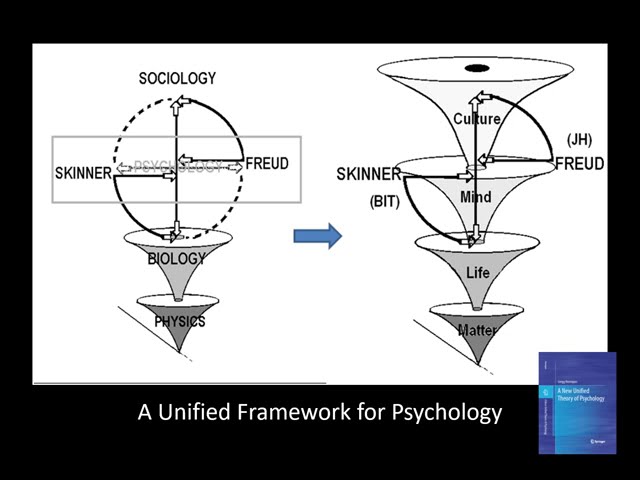
    I agree that the system focuses on the observable data/signals as the baseline, since it does aim to be scientific, and naturally, the human unconscious and the way in which archetypes play a role within it is not something externally observable. But once the vultology reveals the person's cognition, it also in effect says something about the likely mythological emergence that corresponds with that cognition. I've always liked this graph 🙂 you may have already come across it but.. I wonder what your thoughts are about it?
    Image

    There is indeed a bit of an audience mismatch innate to CT's endavors. On the one hand, it is positioned amidst the personality enthusiast community, which is very liberal towards intuitions and speculations, open to self-definitions at the expense of standardization. The personality community is, in some ways, a forum of individuals looking for self-discovery and feeling their way in the dark for themselves; using various models as heuristic tools along the way of that journey. There may not necessarily be any concern for objective, biological statements about personhood, or discrete realities if they don't apply immediately to matters of subjective clarity.
    A materialist theory, that is sparse in statements, and which is in some ways less malleable to speculation and abstraction away from literality, is temperamentally opposed to those considerations. It is more E-S-T in terms of ontological biases: object-oriented (E), literal (S), and abiotic (T).
    But what was so refreshing about your video, is that you simultaneously held both CT's current video progress in mind, while also alluding to the possibility of more to come-- as well as a difference between the developer's views and the model's current state. The truth is I'm so deeply interested in psychology, but it is so very very hard to make genuine progress into psychology. On the whole, the field of psychology is in a bit of a reproducibility-crisis and it has not yet established too much in the way of hard science. I actually recall you said as much in one of your channel videos, and I was nodding quite a lot as I watched. The idea of CT is therefore a hyper-conservative one, which says, given the state of ignorance we have, what (if anything) can we establish?
    The rudimentary observation that people who gesticulate, head nod, and head shake very often-- are to be found more strongly represented in law, politics, and leadership is-- one that, as far as I know, hasn't really been documented properly. Nor is it considered genuine information about personality.
    The rudimentary observation that a person who is constantly physically engaged with the environment, is to be considered psychologically engaged as well, is also not sufficiently established.
    (And so you get people like Stephen Colbert being typed as INFP by the MBTI, and Anna Kendrick being typed as Fi/Ne by OPS, despite their abundant gesticulations, object-engagement, and so forth. And it's because of how they're not considering that dimension in their analyses.)
    I wish so very much to soar into theory, and speculation. My heart yearns for it so much. But so little is 'well established', that the majority of my efforts go towards the elementary components. ? But it's all building up to something. I have plans for future series, now that I'm making the vultology one. Once this, and one more series (on development levels) is completed, my mind will turn towards the theoretical and psychological elements quite intensely.
    This year may be the year of the vultology videos, but I hope next year will be a year for focus on information processing, psychodynamics and so forth. But I can't get to that domain without establishing a foundation first-- else I risk falling into the same traps that befall other models a well. (oh gosh, I should stop this ramble right about.. now!)

    You're pioneering! It's exciting to be involved.

    You never ramble enough! ? I’m reading and will reply a little bit later. Thanks for the comments as well

    Working our way from vultology to behavior, then to cognition, will take some time but we'll get there. ? We begin first with occupational studies because those are easy to quantify, as a way of getting a foothold. And it's a way of getting a bit of practice, in terms of how to approach psychological matters. The idea is that occupational matches ought to indicate a deeper, underlying cognitive convergence among individuals-- which is the cause of the occupational convergences. That 'cause' can then be explored in other ways.
    But also-- your comment about the challenges with falsifiability in the face of a person-specific psychic mismatch are something to consider, indeed. If ten people are visually typed as NiFe and 5 of them share a given interest (say, mysticism) which is represented at 1/50 in the population average, then the prediction is successful; predicting a psychological interest at 10x the frequency of the norm. At the same time, one could argue '50% of the time it's wrong'-- since 5 out of 10 will not be into mysticism (as the example here).

    I think this is partly an issue of what the system is being used for, or how the results are interpreted. On one hand, one could hardly ask for much better than a 10x predictive power above the norm, when doing averages. But on the other hand, if the goal is to have a person-specific psychological match, that is still insufficient. Anything short of full resonance is a type of falsification. Something that comes to mind for me is the averages that emerge among the sexes. Men are more likely to go into engineering and women into caretaking, by a whole standard deviation or more. But if you tried to predict if a person was a man or woman, based on being a caretaker, you'd still be wrong ~30% of the time.
    My speculation is that.. the nature of the phenomenon CT is tracking, is more like biological sex; such that its reality manifests in averages, because it is innate-- but not synonymous with self report or whatever emerges from the complex interplay of innate type and environment/nurture. But it's dangerous to use this as an 'excuse' for poor vultology-psychology matches. The question can be raised, if CT were really solving a piece of the problem of human consciousness, why wouldn't it be a better predictor of holistic (nature+nurture) personhood than anything else?

    ^ having said that, CT does hold a nature+nurture philosophy, where nurture is tracked by development levels. Different developments would have more fine-tuned averages and things types are into, and ways of thinking, so the psychology gets more specific. So it's potentially capable of resolving this issue, and getting closer to that self-image, through tailored profiles for each of the developments. Further tailoring happens when we account for emotional attitude and fallen affect. The idea here is to get as close to the manifested psychology of the individual, as visual analysis will allow. The development profiles are not yet complete, but they are my shining hope for a solution to this problem of better psychological 'fit' - which is a real problem indeed. (okay, i really am done rambling now, and i am very late for work-stuff. ttyl guys! ?)

    Agreed that you can't really ramble enough! It's incredibly insightful

    I see isomorphism or analogy to 'tree of knowlegde system' https://youtu.be/1SAlRLaFsaU I wonder if it was insiration.
    Image

    Spot on! ? Tbh. I am impressed. ? ? I recognized that you have high level of critical thinking and philosophical thought skills that I value a lot. __ Yeah, vagueness of psychology is a weakness of CT but I prefer that and looking for future improvements than for example something like axis XII presented. Where they make cathegorical errors of confusing cognition and signals/behaviors and then jumping to conclusion about inner psychology directly from signals (using own assumptions). I think psychology and cognition will radiate from signals but I don't think there's perfect match between the two. For example what we see is a motor movements controlled by motor center in the brain. We will have more information about it (motor center) than about whole brain functioning. I might be wrong but it would be better if they verify their claims and take E-S-T approach like Auburn first but instead I see it's their practice already. It's funny when they annonce big discovery about "modes" but it looks like "we see patterns of these 3 signal repeating again and again and we know that it means something but we don't know what". xD How about paralyzed person? Don't have cognition? There are things that I have different opinion about than Auburn but I appreciate his attitude and scientific approach to the topic. The best I have seen so far. But I think we all agree upon it. 😉 I would like see more sources and literature from where Auburn get inspiration to expand my own research and see how CT can be contextualized on broader horizon. But on other hand I see how this can be distracting from doing own work.

    Hi Bella! Yes, I had come across that graph before. I like too, and it does make sense to start from the vultological level (since it's observable). As was implicit in my video, I very much look forward to seeing more content from CT on the 'Behaviorism' scale. I'm guessing the choice of word (behaviorism) is not coincidental, and that intends to formalise personality traits in externalist terms -- rather than, say, psychologistic ones. Again it would be in line with 'E-S-T' the direction CT is following thus far. Ironically, although the 'Mythology' scale is salivating in many ways (: p) it is the one I'm really in the dark about right now, in terms of how it will be consistently integrated within the theory. There is always a risk of introducing very qualitative concepts when you discuss mythology, which could (but maybe won't) prove a challenge for correlations with the other scales. Basically I think CT could work without Scale 4, but adding Scale 4 shows just how ambitious it is

    Yeah, I agree with your sentiments re the personality community as a whole. Like you said it tends to see personality models as heuristic devices for further self-discovery (I would actually go so far as to say, for self-creation at times, lol). I've experienced this more than once with my own channel; whenever I go the more theoretical route in my videos, I get fewer views and fewer comments. This is partly why I've grown bored of making INFJ-oriented videos -- yes, they get me views and subscribers, but I feel like I've covered everything and I'm not stimulated anymore. That being said, I think there are always ways to 'package' a product to reach the widest possible audience. To some extent this relies on effective messaging. The way I marketed my book on the INFJ played down how theoretical the content of the book is, and focuses more on being 'the deepest investigation of the INFJ available,' etc. A bit cringey but it works. For CT, the way I think about it is that its 'objective' dimension is also an opportunity. It conflicts with the subjective drive of a lot of people in the personality community, but on the other hand, a lot of these people secretly fantasise about being able to 'pin down their type once and for all', and keep being frustrated that they can't. Otherwise they woudn't go from one typing service to another and still keep researching. So I think that in this sense, CT may have a card to play, though I'm not sure how exactly it could play it. : p

    Just another thought regarding the 'unobservable' elements of a theory. Yes, I agree that a theory could be perfectly scientific while having assumptions which cannot be tested directly, but can indirectly. It seems to me this happens all the time in physics, for example. The experimental physicists at CERN are not looking for strings, which may be too tiny to be ever observable, but for evidence of particles being 'missing' in certain experimental conditions, which would support the idea that the particles were sucked into extra dimensions. Which would support, in turn, the assumption of extra dimensions that is incorporated into string theory. It's indirect support of the theory but it's scientific all the same. The same applies to the multi-verse: it's possible we'll never be able to observe whether there are other universes, but the multi-verse could be a logical entailment of the future dominant theory, and thus be indirectly corroborated
    • It's often in the logical form 'if x, then y' -- so if you observe x then you can deduce y, etc.

    That all makes good sense. But perhaps it might be worth considering making a video where you explain these things to the audience (the work in progress part, the different scales part, etc). I suspect that in the eyes of many of them, CT is 'really' about the vultology and not much else. Now I bet you're going to say you've already made such a video and I'll have to go hide behind a bush hehe
    And now I have to go again so I'll reply to the rest later! Sorry for being so elusive ?

    There isn't a dedicated video on the four layers of the theory, so no need to hide! that would be a good thing to do. ?

    More work on your plate, yay! : D

    Of the many things I could say, I don’t know why but I’m tempted to wax poetic for a moment.. and leave behind the structured language to explain a little of how I experience this journey myself. I saw something that I can’t unsee, and I want others to see it too. It’s unshared insights into human nature, so I feel an obsessive obligation to uncover it, the way an archeologist may feel about ancient bones that need to make it to a museum. It’s a torment I can’t let go of; a calling I can’t shake. I’m not the kind of person who seeks fame or status, but it just so happened to land upon me. So I am hoping to meet the universe’s challenge to me, if at all possible. What is this challenge? In a way, it’s an alchemical act. To bridge the gap between matter and spirit, to unite mind and body, to build a bridge between polarities. To solve a part of the problem of consciousness, by unraveling its mysteries in concrete forms. To make the infinite, imminent. Such a project rattles and jars both camps of this divide, as you well noted. The EST and the INF orientations of humanity are like two polarized camps that cannot reconcile; a feud going back to the beginning of humanity. The scientists and the esoterics struggle to bridge this fissure, despite centuries of philosophy.
    But I believe there is one ultimate reality. One in which all that is psychic is also physical, and no distinction exists really between them. But to create this bridge, I have to start extending out planks from both ends of the fissure, working towards the middle through the material world and the psychic world. In order for CT to succeed, it has to develop a meta-description of all of humanity, including everyone’s ontological biases; contextualized in a holistic way, while also not violating any ontological lenses, all of which are valid. It itself has to somehow harmonize all polarities within humanity, N-&-S, T-&-F, P-&-J, and create knowledge that is simultaneously material and psychic. The Jungian psychology traditions henceforth have been largely INF in orientation, yet have sought to describe all of humanity from that place. This is an imbalance that has pushed CT to respond in opposite measure and try adamantly to build up the other side of this bridge, the EST element, which is the most lacking. Jung, as an NiFe, left an imbalance, and I am trying to supply that counterbalance. But ultimately I know CT needs to return away from EST towards the middle ground, after sufficient fundamentals have been laid down.
    It’s hard for me to express the vision/future I see in my head, but I see CT at a certain stage of its own historical evolution, as it oscillates between different ontological considerations, back and forth, weaving together little by little the net that can merge opposites.

    (This is just how I see my own efforts, mythologically, as an alchemical act performed on reality itself. But I keep this largely to myself because it is pompous to say it out loud. Nor do I wish to be viewed as esoteric. However I motivate myself is, I hope, independent of the final results.)

    #30899
    Ren
    Participant
    • Type: FeNi
    • Development: llll
    • Attitude: Adaptive

    Hi Auburn,

    I am fascinated by this idea of a "meta-description of all of humanity". I didn't realise the project behind CT was that ambitious.

    There are passages in Psychological Types where Jung sounds almost 'cognitively deterministic', in the sense that he seems to say our points of view are bound to be determined by our cognitive functional alignments. He even goes so far as to suggest that widespread disagreements between theorists/theories might boil down not to who's right and who's wrong, but to people talking past each other because they operate within different, incommensurable ontologies, with different conceptions of what constitutes validity, etc.

    So an interesting question to ask you would be something like this: how can you succeed in developing a meta-description that is not, in the last analysis, a reflection of a TiNe ontology? It sounds as if CT aims at a final elaboration where the cognitive functional alignment of the theorist (i.e. yourself) is neutralised or bracketed. In the early twentieth century, Edmund Husserl tried to do that with epistemology, and is widely considered in hindsight to have failed. So I am curious to hear what your stance on the matter is -- whether you think it's a pseudo-problem or something to be taken seriously.

    Obviously, a lot of science doesn't seem to get overly worried about this issue. But perhaps it can get away with not being too worried because it deals with objects, not subjects. CT, however, is aimed at the subject, so the question of the theorist's own subjectivity becomes relevant. It seems to me there is an interesting methodological challenge rearing its head here, namely: how to provide a meta-description of all humanity from a neutral stance, in a language that is not always already 'contaminated' by the local ontological stance of the scientist.

    Looking forward to any thoughts you may have : ) I have other thoughts regarding the bridging of physical and psychic but I might share them after you've responded to the above.

    • This reply was modified 4 years, 5 months ago by Ren.
    #30902
    Juan E. Sandoval
    Keymaster
    • Type: TiNe
    • Development: l--l
    • Attitude: Adaptive

    It is indeed quite a problem we have to address!

    I call this the "Author Bias Problem" - I've written a wiki page about it here, with some proposed solutions, which may be a good starting-off point for us:
    https://cognitivetypology.com/index.php?title=Author_Bias_Problem

    Curious to know your thoughts on the article, and I will read up on Bracketing in the meantime and get back to you. 🙂

    (Looking forward to your other thoughts as well)

    #30903
    Ren
    Participant
    • Type: FeNi
    • Development: llll
    • Attitude: Adaptive

    I should have guessed you had anticipated the issue long ago!

    Cool, I've had a read of the article and the two main proposed solutions. I'll come back with more possible observations once I've digested the content properly.

    #30904
    Juan E. Sandoval
    Keymaster
    • Type: TiNe
    • Development: l--l
    • Attitude: Adaptive

    In summary, my essential thought on the matter is  that, if type is real, there is no reason why it wouldn't be in medical literature, with a growing body of studies on each type, and facts-based descriptions that can be just as decentralized in authorship as any other important fact we know of ourselves and our constitution.

    We don't have this body of literature because we don't know what type is, 'really'. We need to get there first, before we can study it. Oddly enough, if type turns out to be a biological reality, then that is actually more of the easy part.

    After proper identification of type is established, whether just by vultology or also future methods involving genetic, neurological or other sorts of testing -- the question of "what it means" to be that type, what it means to be a part of this biological cross-section of humanity, is a very complex one. Essentially, every element of your human nature would be tinted with one's ontological assumptions about reality, and color that experience. And yet no specific behavior is exclusive to your type, but the manner/qualia of that experience would be. This creates a situation of infinite complexity. Getting that right is impossible without a lot of testimonies from verified individuals.

    This is part of why I have focused on the quantification of type as the central and most important starting point to the proper study of types at all. You have to have clean samples, before you can extract out psychological information. Otherwise you're going to be meshing together testimonies of diverse mistypes (which is what's happening now in typology). You get a lot of Ji-leads adding in their individualism and experiences in profiles like that of the INFJ. Thus the profile takes that hybridized form.

    ~ ~ ~

    It's been my long-term dream to have a volume set of 16 books produced, each of which will contain the autobiographical testimonies of dozens of individuals of that type. Perhaps the books would be divided into two parts: the first part would be an editor's summary of the testimonies, while the second half would be the raw testimonies they share. Together, they would produce the most faithful archive of the types, not just described by theory, but described by people themselves.

    I haven't read it yet, but I imagine your own book on your subjective experience is the kind of autobiography that would fit neatly into this collection?

    This could also function as a sort of encyclopedia; a resource newly born individuals can used as a "manual" for life. I imagine a future in which medical experts can identify type early in life, and give the parents the corresponding type's volume, so they can get a sense of what kinds of life-paths and life experiences their child is predisposed to have. And perhaps it might guide their growth into the optional directions.

    The idea is that these volumes would be published as a set, and be updated every few years. I'm in the process of thinking about how to gather this data, but I am pretty sure I will require the assistance of various certified vultologists practicing in therapeutic settings, who might encounter patients willing to contribute their personal accounts. So this would be a group effort. This is also why I want to get as many certified vultologists 'on the field' this year, to begin this project.

    ~ ~ ~

    It's been 100 years and we have not developed such an encyclopedia because we have not really isolated what type is. And humanity cannot truly progress forward in the field of psychology without solving the type problem, because everything you might want to study about human psychology suffers from this baseline type-variance. Without accounting for type in human studies, your data is not as good. I personally feel that the lack of quantification of type is among the most key elements that has held back the hard-science progress of psychology, because when studies are performed, not accounting/adjusting for type leads every study they perform to be muddled and inconsistent in its outcomes. If humanity was more psychologically homogeneous, we'd be more advanced now.

    #30907
    Lapis Lazuli
    Participant
    • Type: SiFe
    • Development: l-l-
    • Attitude: Unknown

    Your idea for an anthology of volunteer autobiographies does sound like a solution to the author bias problem, but it occurs to me that you could end up with another bias, namely success story bias.  By "success", I mean both subjective and objective: A bias toward both people who are satisfied with their lives and those who are at or near the apex of society in terms of social status.  It's not impossible that you could get autobiographies from suicidal drug addicts, but I think it would take a focused effort to get participation from the "Soft White Underbelly" of society.  The bias would arise not only among those who volunteer to write their stories, but also among the psychotherapists and other vultology practitioners themselves who solicit their stories for publication in the first place.

    One could argue that the mentally unhealthy are a minority, and that it makes sense to orient CT toward the broader population first while dealing with harder cases later, but I wonder how relevant typology is to most psychologically normal people (my guess: not at all).  In my observation, the people most drawn to typology, and the people most in need of whatever benefits it has to offer, are precisely those in mental distress seeking company and comfort among those fighting the same demons they are.  Many of them are people for whom psychotherapy has either failed, or is just barely keeping them afloat.

    Furthermore, I think psychological diversity is much greater at the unhealthy end of the spectrum than at the healthy end, so if the goal is to illustrate the diversity within type, then "failure stories" is where you're going to find it.  I could be wrong about that though.


    • This reply was modified 4 years, 5 months ago by Lapis Lazuli.
    • This reply was modified 4 years, 5 months ago by Lapis Lazuli.
    #30913
    Juan E. Sandoval
    Keymaster
    • Type: TiNe
    • Development: l--l
    • Attitude: Adaptive

    @lapislazuli - That's a fair observation. Part of my motivation for writing the 8 function profiles in two sections (regular then an "under stress") is precisely for this reason. The totality of personhood and typehood includes what the type looks like under stress, so I wouldn't omit that, nor should we omit what they look like in healthy states. I think Jung's descriptions were quite biased towards the unhealthy versions, given his patients were those seeking therapy. What may solve this problem is making sure the anthologies have a roughly equal number of entries taken from psychotherapy on mentally ill patients, and healthy civilian volunteers. Fortunately we have the fallen affect signal to help us sort between these two groupings vultologically.

    #30922
    Ren
    Participant
    • Type: FeNi
    • Development: llll
    • Attitude: Adaptive

    Hi Auburn,

    Just reacting to a couple things you said. Busy week at work, glad it’s the weekend at last. If haven’t been able to find a quote function so I’ll have to rely on the old-fashioned inverted commas, lol.

    “In summary, my essential thought on the matter is that, if type is real, there is no reason why it wouldn't be in medical literature, with a growing body of studies on each type, and facts-based descriptions that can be just as decentralized in authorship as any other important fact we know of ourselves and our constitution.”

    I agree with that. In principle this should be possible, and I see no reason why it shouldn’t be possible in fact as well. As you already know well, with scientific theories it’s usually a matter of making them as robust and faithful as possible to the facts of the matter; the “ideal super-transparent-to-the-facts” scientific theory is just this, an ideal, dreamt of by philosophers perhaps. In practice I think that considering such methods as Integrative Perspective/Multi-Authorship to address the author bias problem is really interesting and just what needs to be done – though I think, reading and thinking on it, that I have a slight preference for the multi-authorship approach with some, restricted, curation.

    It seems to me that there is a difficult condition to the Integrative approach, namely that the author would succeed in integrating his own unconscious processes. If I understand correctly, this means that e.g. the TiNe author would TiNe IIII (tell me I’m not understanding this properly). This condition is really difficult to satisfy, and in any case, like the article says, it would not be sufficient to cover the 16 types. The other concern I have is that a fully integrated TiNe would still be a Ji-lead; in other words, they would still think like a Ji-lead, even if their grasp of the other cognitive processes – here Ne, Si, Fe – is more refined. Perhaps this is not an issue. I’m just wondering out loud about it.

    The advantage of the Multi-Authorship approach is that the curator could focus on a mostly subtractive method, where instead of adding content that might be tainted by his own consciousness, he instead removes content that can be shown not be specific to the type in question, until only the relevant content remains across the various self-descriptions pertaining to a given type. Whereas bias is always threatening to interfere with an additive approach, I think it’s much more easily neutralised with a subtractive approach. So I wouldn’t necessarily lean towards ‘no curator at all’, but rather for a subtractive curator. It would be fine to have an accompanying critical commentary as well, since the various testimonials/primary sources would be there anyway to speak from their own standpoint.

    “I haven't read it yet, but I imagine your own book on your subjective experience is the kind of autobiography that would fit neatly into this collection?”

    In some sense yes. In another sense, it is in the tradition of phenomenology, so my book seeks to isolate particular structures of the INFJ consciousness that apply across the board. I think that if I were to contribute to your collection, I would opt for a less theoretical testimonial, in order to let my natural cognitive processes express themselves as transparently as possible. Given the focus of my book, there is more Ti on display than would be shown in my everyday behaviour.

    Still, it’s really cool to realise that my concept of ‘Jungian existentialism’ could actually be seen as complementary with CT 🙂 By focusing on the subjective, qualic dimension of type. Of course all of this would be a little ironic if my account ended up being reflective of FeNi instead of NiFe!

    “I think Jung's descriptions were quite biased towards the unhealthy versions, given his patients were those seeking therapy. What may solve this problem is making sure the anthologies have a roughly equal number of entries taken from psychotherapy on mentally ill patients, and healthy civilian volunteers. Fortunately we have the fallen affect signal to help us sort between these two groupings vultologically.”

    Quick question from a CT newbie: is the Fallen Affect component of vultology the method whereby to identify the type of an unhealthy individual, roughly speaking?

    • This reply was modified 4 years, 5 months ago by Ren.
    #30924
    Juan E. Sandoval
    Keymaster
    • Type: TiNe
    • Development: l--l
    • Attitude: Adaptive

    A subtractive curator! That's a brilliant idea, hah! 😀

    I like it. Thanks for bringing that up, it makes the most sense to me too. A curated anthology sounds like the right plan. I'll see if I can come up with a way to start gathering that collection, from volunteers.

    Regarding your case, I just got your book, and am about a third into reading it, and am really enjoying it! Both for its own contents, but also as a way to understand you better. As I mentioned in the first video of my lecture series, vultological information is meant to add/support psychological information, rather than override it. And what you seem to be describing in this book does appear to be the same thing that I call NiFe -- which is by no means an obvious thing! I'm quite amazed, really.

    I find your description of things, and functions, to be quite in harmony with my own take on things; Pe being information gathering, Pi being information mapping, and so on. While it may be tempting to consider this a canonical view in typology, it's by no means obvious to me that such agreement exists. So we seem to have quite compatible views even among disparate Jungian interpretations. (I also appreciate your mention of CT at the start of the book)

    As for the predicament of Ni you describe, again I am not fully done with the book but I've read your outline of the Problem, and.. I can see that same problem manifest in those I've typed as NiFe as well. Much of this can be seen in the NiFe video I made, although it requires some breaking-down of the contents. What amounts to the Ni-leads inclination towards pansychic thought, the inclination to believe in the interconnectedness of all consciousnesses (which the videos described) is essentially an expression of this very problem of Ni's non-separateness, that you also describe. Indeed, a discrete "I" is rejected, philosophically, by such people as NiFe Ekhart Tolle, and (as will feature soon in the NiTe video) Adi Da Samraj. They frame it as succumbing to the illusion of separate-self, of ego, of differentiation. This could very well be an effect generated by the very nature of Ni's perception which disallows world-differentiation, especially in standard development (l---) which has no reason-based (i.e. J=rationality) countermeasures to that implicit intuition's automatic perception.

    I have many more thoughts about this, but perhaps I will save them for a separate thread, once I finish the rest of your book.

    Quick question from a CT newbie: is the Fallen Affect component of vultology the method whereby to identify the type of an unhealthy individual, roughly speaking?

    Yes, 'roughly speaking' as you say. The fallen affect signal seems positively correlated with low mental health, or aberrant psychologies of some form. But we don't yet have as much information on it as we'd like. What we do know is that it alters the 'flavor' of the type-- often towards a more introspective and depressive angle, but it can also manifest as mania. People with lower functions developed are somewhat more likely to show it, and it partly goes away when people's mental health improves.


Viewing 10 posts - 1 through 10 (of 10 total)
  • You must be logged in to reply to this topic.
bookmarkglobeenvelopeshopping-bag